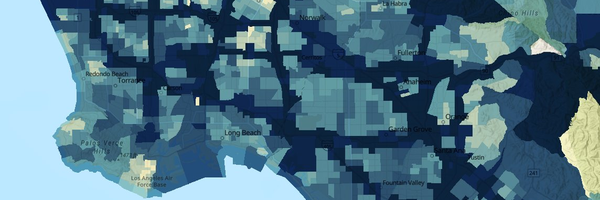
Traffic Impacts
Exposure Indicator
Measures the volume of vehicle traffic near communities—a major source of air pollution tied to asthma, cancer, and adverse birth outcomes.
What are traffic impacts?
California has the biggest network of freeways in the country, and its cities are known for heavy traffic. Traffic impacts is a measure of the number of vehicles on the roads in an area. Exhaust from vehicles contains many toxic chemicals and plays a role in the formation of smog. Non-white, Latino, low income, and non-English-speaking people often live in or near areas with high traffic.
Why is it included in CalEnviroScreen?
- While California has strict vehicle-emissions standards, exhaust from cars and trucks is the main source of air pollution in much of the state.
- Major roads and highways can bring air pollutants and noise into nearby neighborhoods.
- Exhaust fumes contain toxic chemicals that can damage DNA, cause cancer, make breathing difficult, and are associated with low birth weight and premature births.
- Children who live or go to schools near busy roads have higher rates of asthma and other lung diseases than children in areas farther from roads.
How is it measured?
- The indicator used traffic volume data from Caltrans for on-road sources and information on road length for major and local roads in and near each census tract.
- Traffic impacts is calculated by dividing the traffic volumes by the total road length for the year 2023.