Drinking Water Contaminants
Exposure Indicator
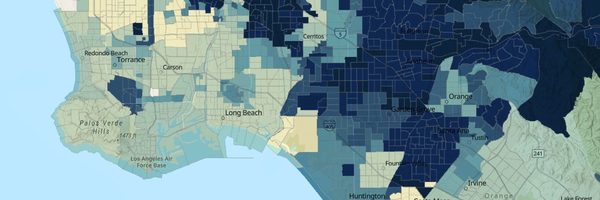
Measures contamination in community drinking water—a cumulative exposure that disproportionately affects rural and low-income Californians.
What is drinking water contamination?
Most drinking water in California meets requirements for health and safety. However, the water we drink sometimes becomes contaminated with chemicals or bacteria. Both natural and human sources can contaminate drinking water. Natural sources can be found in rocks and soil or come from fires. Human sources include factories, sewage, and runoff from farms. Poor communities and people in rural areas are exposed to contaminants in their drinking water more often than people in other parts of the state.
Why is it included in CalEnviroScreen?
- Numerous chemical and bacterial contaminants are routinely detected in the drinking water across California.
- Nitrate from fertilizer or animal manure can leach into groundwater and contaminate wells. Nitrate can cause a blood condition in infants called blue baby syndrome (methemoglobinemia) and may cause birth defects and miscarriages.
- Arsenic, a common contaminant, occurs naturally in some rocks and soil and is often found in groundwater in California. Arsenic can cause cancer.
- Cumulative exposure to contaminants in drinking water, even at low levels, may affect health.
How is it measured?
- The indicator is a drinking water contaminant hazard index combining data on selected contaminants and water quality violations for the years 2014–2022.
- The index accounts for the relative concentrations of different contaminants compared to their maximum contaminant levels (MCLs) and includes data on drinking water violations.
- Average concentrations were calculated for each contaminant in each water system, then matched with drinking water system service boundaries.
- The indicator does not indicate whether water is safe to drink. Specific local water quality data may be available through annual Consumer Confidence Reports.