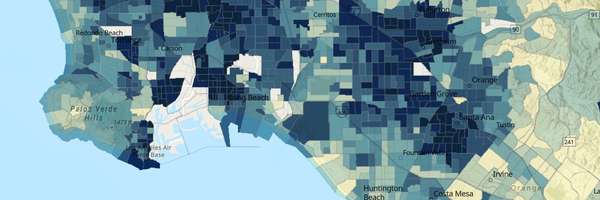
Children's Lead Risk from Housing

Exposure Indicator
Estimates children's risk of lead exposure from older housing—a preventable hazard with no known safe level that can permanently affect brain development.
What is lead?
Lead is a toxic heavy metal that occurs naturally in the environment. However, the highest levels of lead present in the environment are a result of human activities. Historically, lead has been used in house paint, plumbing, and as a gasoline additive. While lead levels have declined over the past five decades in the United States due to various regulations, lead still persists in older housing.
Why is it included in CalEnviroScreen?
- Lead house paint is the most significant source of lead exposure in children.
- Children are most sensitive to the effects of lead exposure, which has no known safe level.
- Lead exposure in childhood can adversely affect brain development and result in blood, kidney, and endocrine toxicity.
- Studies have found that elevated blood lead levels are associated with cognitive impairments and lower educational performance outcomes, even at low levels.
- Historically-used lead persists in paint, old plumbing, and contaminated soil.
- Older housing and higher levels of poverty are associated with elevated blood lead levels.
- Other CalEnviroScreen indicators account for other sources of potential lead exposures such as the indicators for Drinking Water Contaminants, Toxic Releases from Facilities, and Hazardous Waste indicators.
How is it measured?
The indicator combines three elements: the likelihood of lead-based paint hazards based on the age of housing, the percentage of low-income households with young children, and blood lead level testing data for children required to be tested under state regulations.
- California residential parcel data (2024) were used to calculate the percentage of housing units in each census tract with a likelihood of lead-based paint hazards, weighted by age category using hazard rates from a study of West Coast homes.
- Data from the HUD Comprehensive Housing Affordability Strategy (2018–2022) were used to estimate the percentage of households that are both low-income (less than 80% of county median family income) and have at least one child under age six.
- Data from the California Department of Public Health (2018–2022) on blood lead level testing were used to calculate the percentage of children under age six with an elevated blood lead level (≥3.5 µg/dL) per census tract.
- The housing risk index (weighted 60% housing age, 40% low-income households with children) was combined with the blood lead level index using a weighted sum (90% and 10%, respectively) to produce the final indicator value.