
Expert Panel on Emerging Risk Assessment Approaches
The Expert Panel on Emerging Risk Assessment (EPERA) is a panel constituted by OEHHA’s New Toxicology Evaluations Section (NTES). The purpose of EPERA is to provide feedback on NTES research projects, draft documents, and activities. EPERA membership covers diverse research and application experience with expertise in toxicogenomics, toxicokinetics, bioinformatics, chemoinformatics, alternative animal models, and use of new assessment methodology in risk assessment, and related areas.
Current EPERA members

Scott S. Auerbach, Ph.D., DABT is a Molecular Toxicologist that leads the Toxicoinformatics Group within the Predictive Toxicology Branch of the Division of Translational Toxicology at NIEHS. In additional to his role as Toxicoinformatics Group Leader, he leads efforts related to the analysis and interpretation of multivariate data sets (i.e., microarray, RNA-seq, High-throughput screening) for purposes of informing toxicological assessment. Auerbach received a B.S. in biochemistry and molecular biology from the Pennsylvania State University, State College, Pennsylvania and a Ph.D. in pharmacology from the University of Washington, Seattle, Washington.
Steven J Enoch, Ph.D., is a Reader in Computational Toxicology at Liverpool John Moores University in the United Kingdom. Enoch specializes in the use of chemical and metabolism information to predict toxicological hazard without the use of animals, as well as in the development of Adverse Outcome Pathways for both human and environmental effects. He has published and presented extensively on predictive toxicology topics over the past two decades. Enoch earned a Ph.D. from Heriot-Watt University in Edinburgh in 2003 and an M.Sc. in Chemoinformatics from the University of Sheffield in 2004.
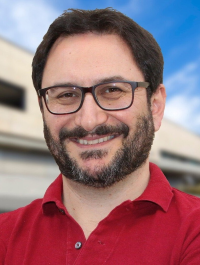
Stefano Forli, Ph.D., is a Professor in the Department of Integrative Structural and Computational Biology at Scripps Research in La Jolla, CA. Forli’s research is focused on the design and application of computational methods to structural biology and drug design, performing rational design of molecules capable of modulating biological processes. Forli and his team combine different techniques, like molecular dynamics, homology modeling and docking to analyze macromolecule structures to identify druggable sites, and screen large libraries of compounds performing high throughput virtual screening (HTVS) or designing focused virtual libraries based on specific synthetic pathways in order to identify small organic molecules that can act as biological probes and novel therapeutic agents. Forli received his Ph.D. in Medicinal Chemistry and Molecular Modelling in 2006 from the Universita' degli Studi di Siena, in Siena, Italy.

Dustin Kapraun, Ph.D., is a Physical Scientist at the U.S. Environmental Protection Agency (EPA) Office of Chemical Safety and Pollution Prevention (OCSPP) and an expert in physiologically based pharmacokinetic (PBPK) models and their applications in chemical risk assessment. and has worked in industry (as a computer programmer), academia (as a professor and department chair), and government (as a staff scientist and researcher). Dr. Kapraun develops and applies PBPK models and other mathematical and statistical models to support human health risk evaluations of chemicals. His research interests include pharmacokinetic models for gestation and the early post-natal period and the integration of uncertainty quantification methods into PBPK modeling analyses. He also develops software tools to improve accessibility and shareability of PBPK models. Kapraun holds degrees in mathematics (B.S., 1998), physics (M.S., 2002), and applied mathematics (Ph.D., 2014).

Ruthann Rudel, M.S., leads the Silent Spring Institute’s exposure and toxicology research programs in Newton, MA focusing on endocrine active chemicals and on the mechanisms by which chemicals may influence breast cancer risk. She also directs Silent Spring's Safer Chemicals Program, which is developing new cost-effective ways of screening chemicals for their effects on the breast, including effects on puberty, lactation, and cancer. One of her more recent studies identified 296 potential breast carcinogens based on their ability to increase estradiol and progesterone synthesis in the H295R in vitro steroidogenesis assay. Her work in toxicology also includes reviews of early life exposure to chemicals that alter mammary gland development and implications for testing protocols and risk assessment. She has also published on toxicology and risk assessment for pesticides, metals, indoor air pollutants, and endocrine disruptors and biomonitoring efforts in studies funded by NIEHS and the California Breast Cancer Research Program (CBCRP). Rudel earned her BA in chemistry and neuroscience from Oberlin College and her M.S. in environmental management and policy from Tufts University.
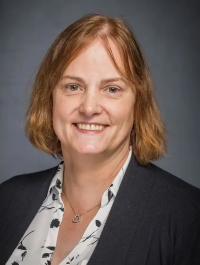
Robyn Tanguay, Ph.D., is a University Distinguished Professor of Molecular Toxicology in the Department of Environmental and Molecular Toxicology at Oregon State University (OSU) in Corvallis, Oregon. She also serves as Director of the Superfund Research Program and the Sinnhuber Aquatic Research Laboratory at OSU. Tanguay’s research centers on systems toxicology, using the zebrafish (Danio rerio) model to understand how environmental chemicals interact with the genome to drive disease and biological dysfunction. Her team has pioneered automated, high-throughput screening technologies that accelerate phenotype discovery and enable large-scale evaluation of chemical bioactivity, including thousands of individual compounds and complex environmental mixtures. She earned her Ph.D. in Biochemistry from the University of California, Riverside, in 1995.

Fred Wright, Ph.D., is Goodnight Innovation Distinguished Professor at North Carolina State University (NCSU). He holds joint appointments as a professor in the Departments of Statistics and Biological Sciences at NCSU. Wright’s main research interests include genomic bioinformatics, toxicogenomics, and the statistical principles underlying high-dimensional data analysis. Wright has been principal investigator of numerous grants, with activities ranging from development of new methods of gene mapping and the investigation of gene by environment interactions. He was also principal investigator of an EPA-funded STAR Center to apply genomics principles to long-standing problems in toxicology.