Freshwater HAB-related Illness Tracking in California
What are freshwater harmful algal bloom (HAB)-related illnesses?
When cyanobacteria (also known as blue-green algae) and algae in freshwater and estuarine waterbodies occur at levels that pose a risk to humans, animals, and the environment, they are referred to as freshwater harmful algal blooms (FHABs). Humans and animals can become sick after ingesting or contacting cyanobacteria, water contaminated with cyanotoxins, or algal mats. Cyanotoxins may also accumulate in fish and shellfish. Signs and symptoms can vary widely, may occur within minutes or days following HAB exposure, and may include:
- irritation of skin, ears, eyes, nose, or throat
- abnormal breathing (coughing, wheezing, asthma-like symptoms)
- vomiting, diarrhea, abdominal pain
- headaches, agitation, weakness
- seizures and death (more common in animals).

How can I report an illness that may be related to freshwater HABs?
- Submitting a HAB-related incident report, including the illness information section
- Emailing CyanoHAB.Reports@waterboards.ca.gov, or
- Calling (844) 729-6466 (toll free)
How can I protect myself, my family, and my pets from freshwater HAB-related illness?
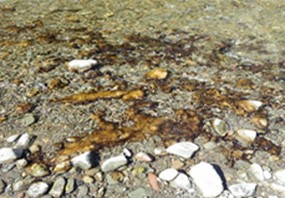 Check if a waterbody has a reported bloom by checking the HAB Reports Map, contacting the waterbody manager, and looking for posted advisory signs.
- Check to see if the water is discolored or has a scum or algal mats.
- Practice healthy water habits at your local lake, river, or stream.
Who is tracking freshwater HAB-related illnesses in California?
Potential freshwater HAB-related illnesses in humans and animals throughout California are tracked and investigated by the Interagency HAB-related Illness Workgroup, consisting of staff from:
- Office of Environmental Health Hazard Assessment (OEHHA)
- State Water Resources Control Board (SWRCB)
- California Department of Public Health (CDPH)
- California Department of Fish and Wildlife (CDFW).
All potentially HAB-related illness reports submitted to the workgroup are evaluated based on the available environmental and health-related information. California implements the Voluntary Guidance for Response to HABs in Recreational Inland Waters for freshwater and estuarine HABs and may include sample analysis for the most commonly occurring cyanotoxins (anatoxins, cylindrospermopsin, microcystins, and saxitoxin), when appropriate.
The number of illnesses considered HAB-related are included in the final summaries (as noted below). Much of the information presented on this web page is also available as a one-page freshwater HAB illness tracking factsheet. This workgroup also investigates and tracks marine HAB-related illnesses in California. For more information on marine HABs and how to report a potentially related human or animal illness, see OEHHA’s webpage on marine HAB-related illnesses.
How many freshwater HAB-related illnesses have been reported for California?
From 2018 to 2025, the Interagency HAB-related Illness Workgroup investigated all illness reports received and determined that 214 met the Centers for Disease Control and Prevention (CDC) case definition criteria for a HAB-associated illness. All freshwater HAB-related human and animal illnesses for California were reported to the CDC One Health Harmful Algal Bloom System (OHHABS). Children and teens younger than 18 years old represent 31% of all human HAB-related illnesses for California, compared to about 45% nationally (CDC, 2024). Children typically swallow more water while recreating and put their hands in their mouth more often than adults.
A summary of HAB-related illnesses reported by year is provided in the figure below (Figure 1). Each fish or wildlife HAB illness event may represent any number of animals ranging from an individual animal to a major event involving hundreds to even millions of individuals (e.g., a lake-wide fish mortality event). Overall, fish and wildlife populations experience the greatest number of illnesses related to freshwater HABs. No livestock incidents have been reported to date for California.
In which counties did these reported freshwater HAB-related illnesses occur?
The maps below (Figure 2) display the counties in which freshwater HAB-related illnesses for California (reported to OHHABS) have occurred for previously reported years combined (2018-2024) and for 2025. Illnesses are grouped by human-only, human and animal (domestic or wild), or animal only. A more detailed table with cumulative HAB-related illnesses in humans and animals, by county, is also available.
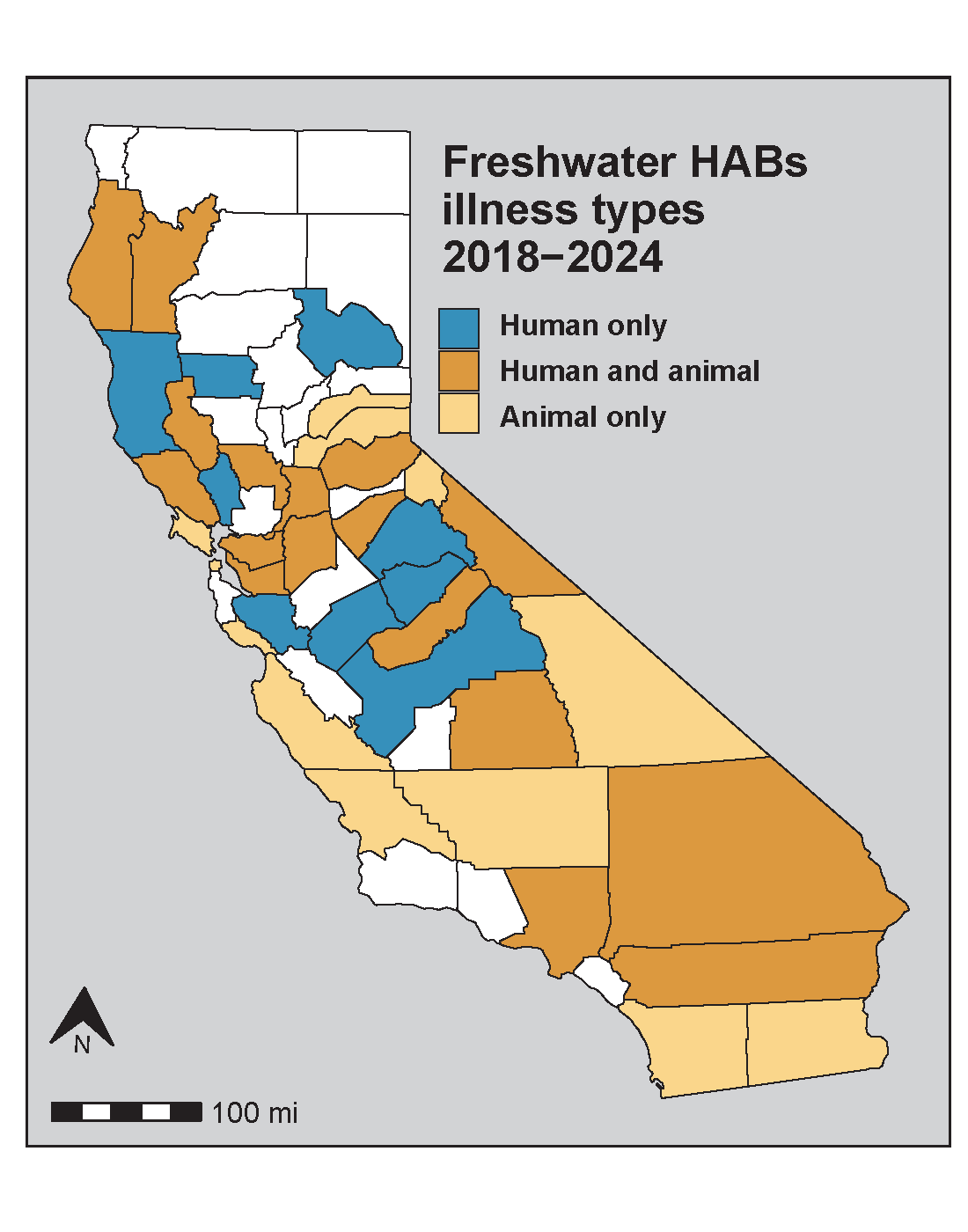
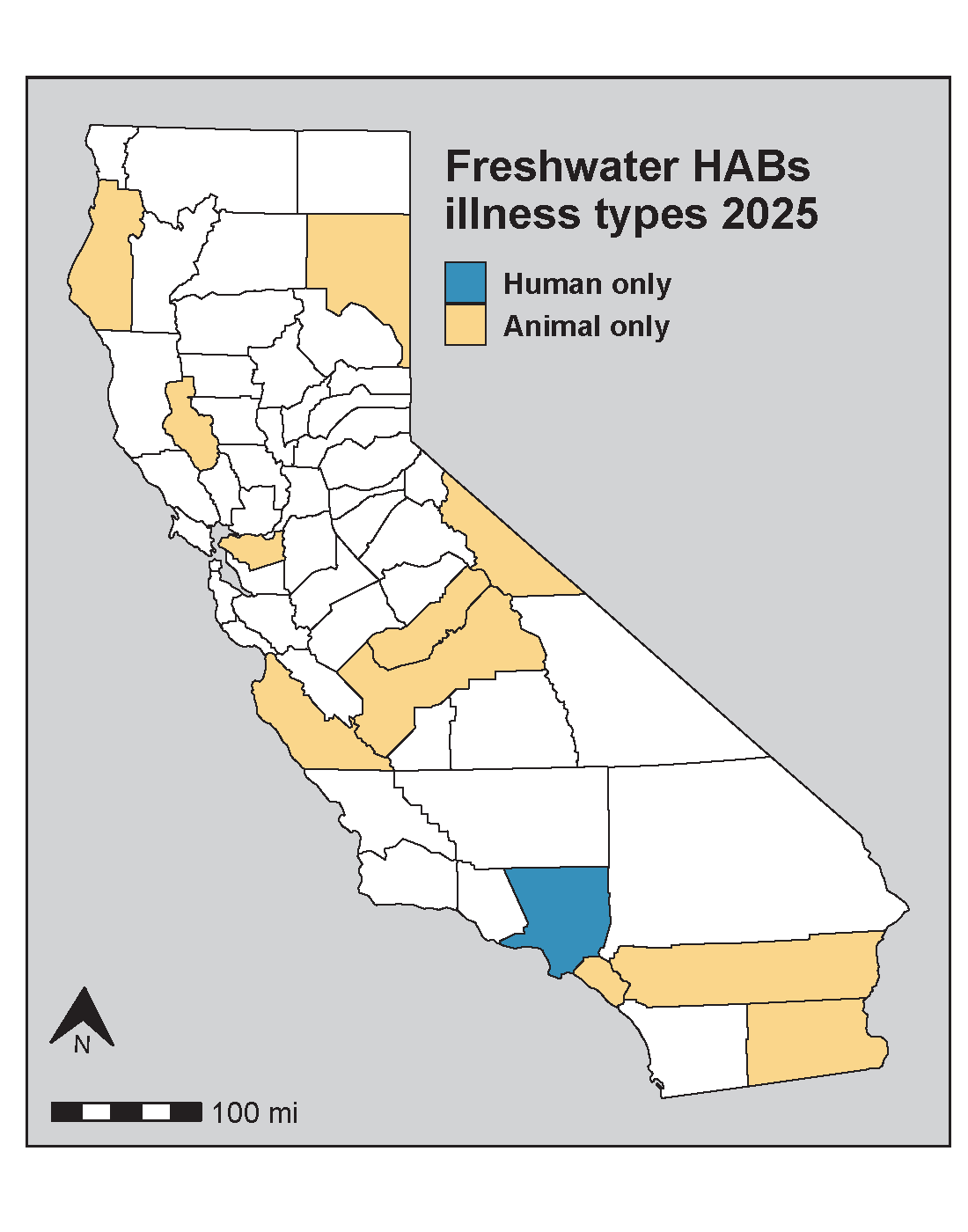
Figure 2. Maps of freshwater HAB-related illnesses (reported to OHHABS) by county for 2018-2024 combined (left) and 2025 (right).
During what times of year have freshwater HAB-related illnesses been reported?
HAB-related illnesses have been reported during most months of the year, with higher numbers throughout the summer months (Figure 3). These seasonal trends may represent a combination of an increased likelihood of HAB events and higher levels of recreational activities in or near water bodies during the summer. Practicing healthy water habits is recommended year-round since some water bodies have reported HABs during all times of the year.
How are HAB-related illnesses being tracked across the United States?
The CDC’s OHHABS is a voluntary reporting system available to state and territorial public health departments and their designated environmental and animal health partners. It collects data on individual human and animal illness cases from HAB-associated exposures, as well as environmental data about HABs. OHHABS is an example of One Health surveillance. One Health is an approach that recognizes that human, animal, and environmental health are interconnected, and that human health, animal health, and environmental health communities can more effectively address many linked health challenges by working together.
- CDC OHHABS Reporting Fact Sheet
- CDC, 2024. OHHABS 2022 Summary Report
- CDC, 2023. OHHABS 2021 Summary Report
- CDC, 2022. OHHABS 2020 Summary Report
- CDC, 2021. OHHABS 2019 Summary Report
- CDC, 2021. Evaluation of Syndromic Surveillance Data for Studying Harmful Algal Bloom-Associated Illnesses — United States, 2017–2019.
- CDC, 2020. OHHABS Illnesses 2016-2018 and OHHABS supplemental tables and figures
- US Environmental Protection Agency, 2018. One Health Approach to Harmful Algal Blooms.
- Hillborn and Beasley, 2018. One Health and Cyanobacteria in Freshwater Systems: Animal Illnesses and Deaths are Sentinel Events for Human Health Risks.
For more information on health impacts from freshwater and estuarine HABs:
- Resources on the CA HABs Portal:
- CDC’s resources:
Fish, Incident Response, Seafood Safety, and Harmful Algal Bloom Section
Sacramento Office
1001 I Street
Sacramento, CA 95814
Phone: (916) 324-7572
habs@oehha.ca.gov