
SB 535 Disadvantaged Communities
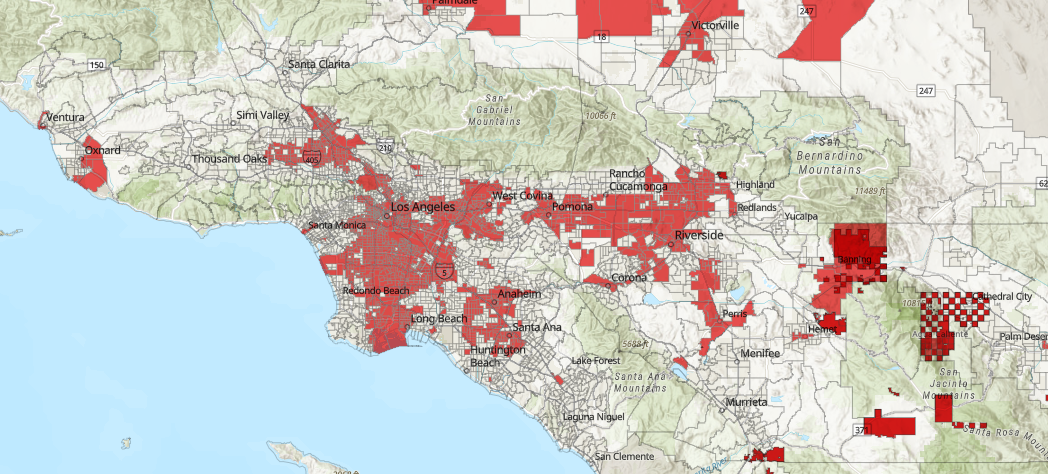
About SB 535
Senate Bill 535 (De León, Chapter 830, Statutes of 2012) requires that a minimum share of California Climate Investments, proceeds from the state's Cap-and-Invest Program, benefit California's most burdened communities. These investments are aimed at improving public health, quality of life, and economic opportunity, while reducing pollution that causes climate change.
CalEPA is responsible for identifying disadvantaged communities, or DACs, for SB 535 purposes, using geographic, socioeconomic, public health, and environmental hazard criteria. CalEPA uses CalEnviroScreen, developed and maintained by OEHHA, as the primary basis for that designation.
For full details on SB 535 and CalEPA's role, visit CalEPA's Disadvantaged Communities page.Priority Populations & Funding Eligibility
The Disadvantaged Community Designation under SB 535 is one of several ways a community or project can qualify for California Climate Investments funding. The California Climate Investments program uses the broader concept of priority populations, which includes DACs as well as low-income communities statewide, the ½ mile area in which low-income communities and households may neighbor CalEPA-defined DACs, and all low-income households anywhere in the state, regardless of location.
Assembly Bill 1550 (Gomez, Chapter 369, Statutes of 2016) established the currently applicable minimum funding levels for priority populations overseen by California Climate Investments:
- At least 25 percent of funds must benefit disadvantaged communities.
- At least 5 percent must benefit projects within low-income communities or low-income households.
- At least 5 percent must benefit low-income communities or households within ½ mile of a disadvantaged community.
Understanding which category applies to a given project or location is important for funding eligibility. Learn more about priority populations and view the updated Priority Populations Map on California Climate Investments' website.
2026 Disadvantaged Communities Designation
In September 2026, CalEPA released the updated designation of disadvantaged communities based on CalEnviroScreen 5.0, which incorporates the latest data, updated 2020 census tract geography, improved methodology, and two new indicators. The 2026 designation includes four categories:
- Census tracts with the highest 25 percent of CalEnviroScreen 5.0 overall scores (2,259 tracts).
- Census tracts with the highest 5 percent of CalEnviroScreen 5.0 pollution burden scores (9 tracts).
- Census tracts that overlap at least 25 percent with a 2022 DAC-designated census tract based on CalEnviroScreen 4.0 (436 tracts).
- Lands under the control of federally recognized tribes*.
For more details on the designation process, visit CalEPA's website.
*A tribe may establish that a particular area of land is under its control, for purposes of this designation, by requesting a consultation with the CalEPA Deputy Secretary for Intergovernmental Relations at TribalAffairs@calepa.ca.gov.
Data Download
SB 535 disadvantaged communities data are available through California's Open Data Portal:
2026 Disadvantaged Communities Data (California Open Data Portal)
For CalEnviroScreen questions, contact CalEnviroScreen@oehha.ca.gov.
For CalEPA DAC questions, contact DACinquiries@calepa.ca.gov.