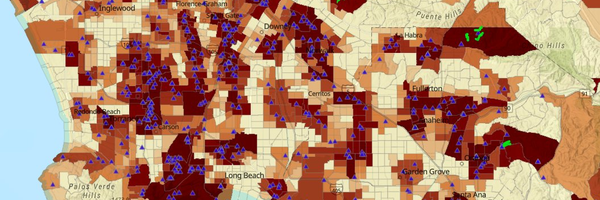
Solid Waste Sites and Facilities
Environmental Effects Indicator
Counts solid waste sites and facilities near communities—sources of toxic gases, odors, and contamination that can persist after closure.
What are solid waste sites and facilities?
Solid waste facilities are places where household garbage and other types of waste are collected, processed, or stored. These include landfills, transfer stations, and composting facilities. The waste can come from homes, industry, or commercial sources. Most of these operations require permits. The communities near solid waste facilities are usually home to poor and minority residents.
Why is it included in CalEnviroScreen?
- Regulated facilities as well as illegal sites that do not follow the law can harm the environment and expose people to hazardous chemicals.
- Solid waste facilities can release toxic gases into the air, even after they are closed.
- Chemicals in waste can leach into the soil around the facility and may eventually pose a health risk to people nearby.
- Composting, recycling, and waste treatment facilities may produce odors, attract pests, and increase local truck traffic.
How is it measured?
- CalRecycle maintains information on solid waste facilities in California. The indicator uses solid waste data from CalRecycle as of April 2026, along with scrap metal recycler data for the years 2023–2025.
- Each solid waste facility was given a value based on its type, how much waste it handles, and whether there were violations. Closed, illegal, and abandoned disposal sites were also included.
- The values for all the solid waste facilities in or near each census tract are added together. This takes into account how close the facilities are to where people live.