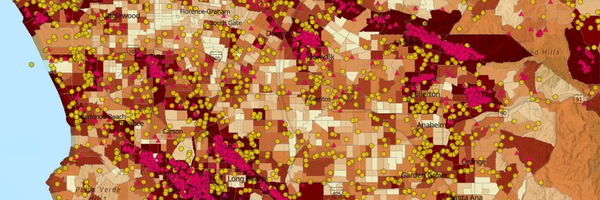
Small Air Toxic Sites
Environmental Effects Indicator
Counts smaller air toxic sources near communities—such as gas stations, autobody shops, and oil and gas wells—that cumulatively add to local pollution.
What are small air toxic sites?
Small air toxic sites are facilities that release toxic air pollutants often located in and near communities. This includes facilities such as gas stations, autobody shops, and oil and gas wells that report toxic releases to state databases. These sources are concentrated in certain communities and can contribute meaningfully to local pollution burden even if their individual emissions can be relatively small.
Why is it included in CalEnviroScreen?
- Air pollution is often experienced as a complex mixture of pollutants rather than single contaminants. Mixtures can amplify health impacts beyond the effects of individual pollutants.
- Smaller sources of emissions within neighborhoods like gas stations and autobody shops are widespread and cumulatively contribute to chronic, neighborhood-level exposures of toxic emissions.
- Oil and natural gas wells expose nearby communities to toxic air contaminants, volatile organic compounds, heavy metals, and combustion byproducts.
- Communities of color communities are more likely to be exposed to these sites.
How is it measured?
- The indicator identified facilities reporting to the California Emissions Inventory Data Analysis and Reporting System (CEIDARS) database that are not already included in the federal Toxics Release Inventory (TRI). It uses CEIDARS facility data reported for 2024 and oil and natural gas well data downloaded in May 2026.
- Oil and natural gas well sites are identified via the Well Statewide Tracking and Reporting System.
- Facilities and sites are scored based on proximity to communities within each census tract.