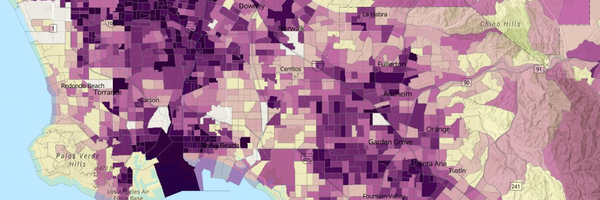
Poverty

Socioeconomic Factor Indicator
Measures the share of residents living near or below the poverty level—an economic stressor that increases vulnerability to pollution.
What is poverty?
The US Census Bureau determines the Federal Poverty Level each year. The poverty level is based on the size of the household and the ages of family members. If a person or family's total income before taxes is less than the poverty level, the person or family are considered to be in poverty.
Why is it included in CalEnviroScreen?
- Members of poor communities are more likely to be exposed to pollution and to suffer from negative health effects as a result of that exposure than residents of richer communities.
- Poor communities are often located in areas with high levels of pollution.
- Poverty can cause stress that weakens the immune system and causes people to become ill from pollution. Families living in poverty are also less likely to be able to afford nutritious food, medical care, and other resources necessary for healthy living.
How is it measured?
- The indicator is the percent of the population living below two times the federal poverty level between 2020 and 2024.
- A threshold of twice the federal poverty level was used in this analysis because California's cost of living is higher than many other parts of the country.
- The US Census Bureau's American Community Survey maintains information on the rate of poverty in different areas in California.