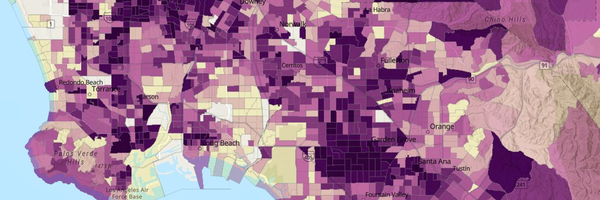
Linguistic Isolation

Socioeconomic Factor Indicator
Measures the share of households with limited English proficiency—a barrier to health care and to critical information during emergencies.
What is linguistic isolation?
Linguistic isolation is a term used by the US Census Bureau to describe households where everyone 14 years or older have at least some difficulties speaking English. In California, more than 40 percent of residents speak a language other than English at home. About half of those Californians do not speak English well or at all.
Why is it included in CalEnviroScreen?
- Adults who do not speak English well often have trouble communicating with people who provide social services and medical care. As a result, they might not get the health care and information they need.
- Linguistically isolated households may not receive or understand important information when there is an emergency like an accidental chemical release or spill.
How is it measured?
- The indicator is the percent of limited English-speaking households, which are households where no one over the age of 14 speaks English well. The data are from the years 2020–2024.
- The US Census Bureau's American Community Survey maintains information on the rate of linguistic isolation in different areas in California.