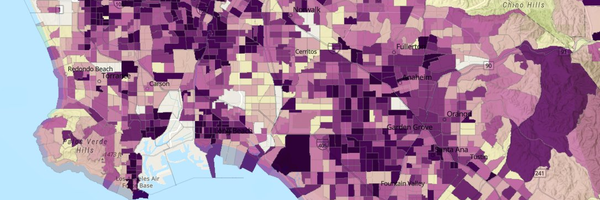
Housing Burden

Socioeconomic Factor Indicator
Measures the share of low-income households burdened by high housing costs—financial stress that can compound the health effects of pollution.
What is housing burden?
Housing burdened low-income households are households that are both low income and highly burdened by housing costs (paying more than 50% of their income on housing). California has very high housing costs relative to much of the country, which can make it hard for many to afford housing. Households with lower incomes may spend a larger proportion of their income on housing and may suffer from housing-induced poverty.
Why is it included in CalEnviroScreen?
- Housing affordability is an important determinant of health and well-being. Low-income households that face high housing costs may be more likely to experience stress, reduced access to healthy food and healthcare, and other negative health impacts.
- The fraction of low-income households paying more than 50 percent of their income on housing is on the rise.
- The housing burden indicator considers the regional cost of living for both homeowners and renters and includes the cost of utilities.
How is it measured?
- The indicator is the percent of households in a census tract that are both low income (making less than 80% of their county's median family income) and severely burdened by housing costs (paying greater than 50% of their income for housing costs). The data represent the years 2018–2022.
- Data from the Housing and Urban Development (HUD) Comprehensive Housing Affordability Strategy (CHAS) is used for the indicator. CHAS data is a special analysis of US Census Bureau data.