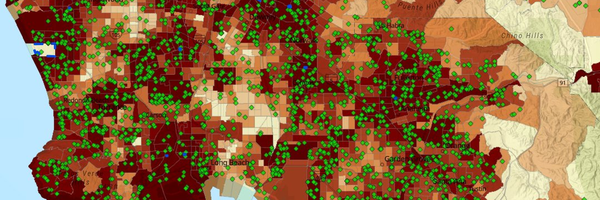
Hazardous Waste Generators and Facilities
Environmental Effects Indicator
Counts facilities that generate or handle hazardous waste near communities—operations that can contaminate nearby air, water, and soil.
What is hazardous waste?
Waste created by commercial or industrial activity contains chemicals that may be dangerous or harmful to health. Only certain regulated facilities are allowed to treat, store, or dispose of this type of waste. These facilities are not the same as cleanup sites. Hazardous waste includes a range of different types of waste, from used automotive oil to highly toxic materials produced by factories and businesses. Studies have found that hazardous waste facilities are often located near poorer neighborhoods and communities of color.
Why is it included in CalEnviroScreen?
- Hazardous waste is transported from businesses that generate waste to permitted facilities for recycling, treatment, storage, or disposal.
- Contamination of air, water, and soil near waste generators and facilities can harm the environment as well as people.
How is it measured?
- The Department of Toxic Substances Control maintains information on where hazardous waste is generated and the facilities that handle it. The indicator uses hazardous waste generator data for the years 2023–2025, along with facility data received in 2026.
- The indicator adds up the number of permitted hazardous waste facilities, hazardous waste generators, and chrome plating facilities in each census tract.
- Only large generators and generators of RCRA (Resource Conservation and Recovery Act) waste were included.
- The score takes into account how close facilities are to neighborhoods where people live.