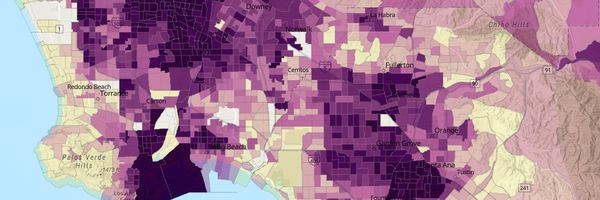
Educational Attainment

Socioeconomic Factor Indicator
Measures the share of adults without a high school education—a factor associated with greater vulnerability to the health effects of pollution.
What is educational attainment?
Educational attainment is the highest level of education a person has completed. People with more education usually earn more and have greater access to resources than people with less education. California has a relatively high percentage of people without high school degrees compared with the rest of the United States.
Why is it included in CalEnviroScreen?
- Adults with less education have more pollution-related health problems and are more likely to die from the effects of air pollution than those with more education. This is possibly due to differences in access to healthcare, employment, quality housing, and other factors that affect vulnerability.
- Studies have found that communities of more educated people are less polluted.
How is it measured?
- The indicator is the percent of the population aged 25 and over with less than a high school education (2020–2024).
- The US Census Bureau's American Community Survey maintains information on the rates of educational attainment across different areas in California.