
Potential Health Concerns with Eating Seafood after an Oil Spill
Polycyclic aromatic hydrocarbons (PAHs) are the chemicals in oil most likely to accumulate in seafood.
PAHs pose the greatest potential health risk to people who eat oiled seafood. Some PAHs, such as benzo[a]pyrene, may cause cancer.
See our PAHs in Fish and Shellfish page for more details.

OEHHA determines the likelihood and duration of a public health threat from eating seafood after an oil spill based on the following factors:
Oil type and amount spilled
Location of the spill
Spill response (level of oil containment)
Weather and water temperature
Fishing activity in the area
Seafood species (see graphic below)
Likelihood of oil exposure
Potential to bioaccumulate PAHs
Commercial, recreational, or subsistence importance
Location (in the water, on the shoreline, or buried in sediments)
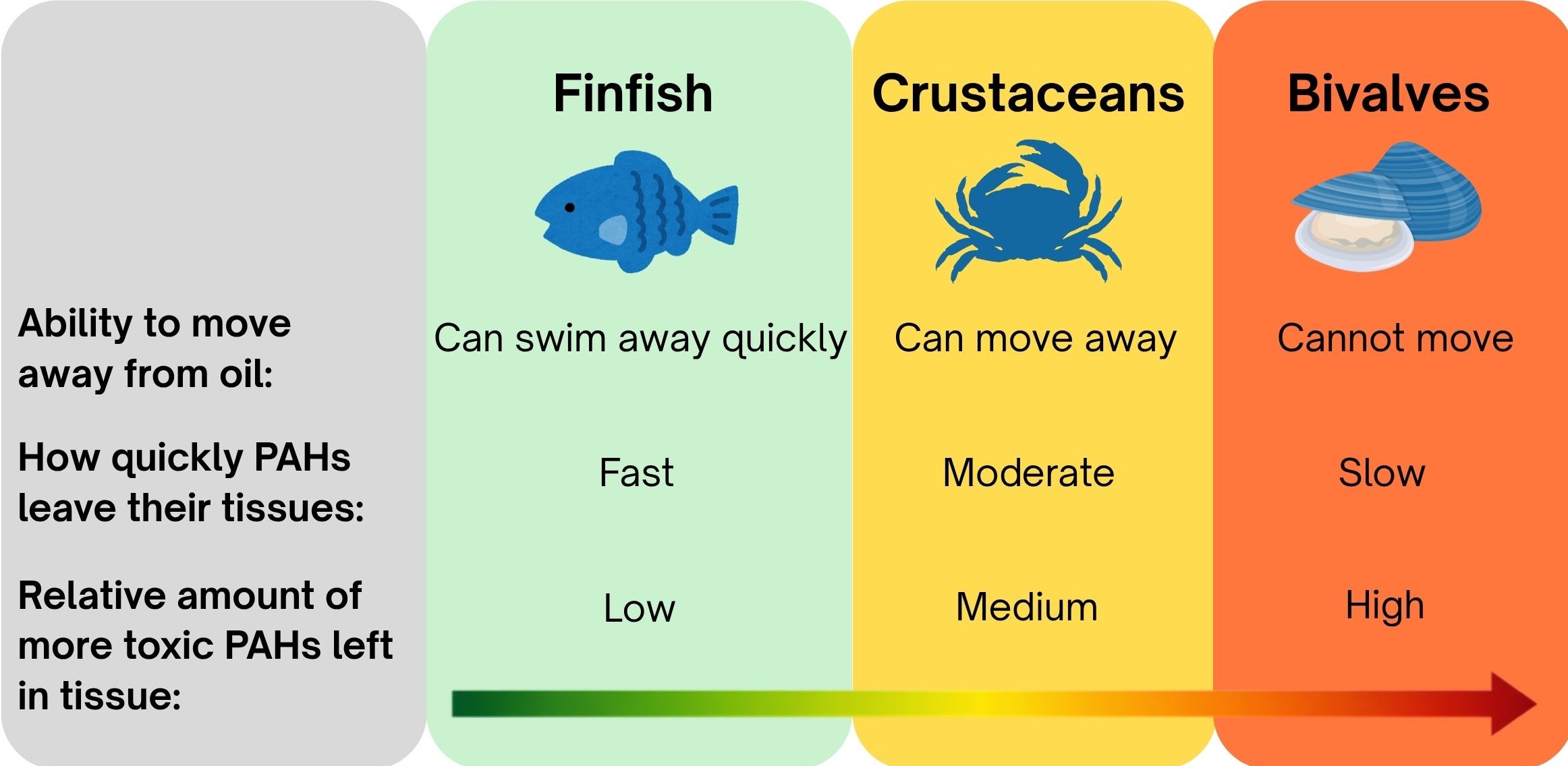
For more technical details on our risk assessment protocol, see OEHHA's Protocol for Seafood Risk Assessment to Support Fisheries Re-Opening Decisions for Marine Oil Spills in California
Fish, Incident Response, Seafood Safety, and Harmful Algal Bloom Section
Sacramento Office
1001 I Street
Sacramento, CA 95814
Phone: (916) 324-7572
Fish@oehha.ca.gov